
What a Piece to Camera Really Means, in Plain Words
A piece to camera is the moment a reporter speaks straight to the lens. This note explains what the term covers, how it differs from a voiceover, and why it is used.
Helen Marlowe · · 5 minutes to read
The term and where it comes from
A piece to camera, often shortened to PTC or a stand-upper, is the part of a television report where the reporter appears on screen and speaks directly to the lens. In a newsroom you will hear it used as a noun and a verb: we need a PTC from the car park, or she is doing the PTC now. It sounds simple, yet it carries a particular job inside a package.
The reporter is no longer a voice laid over pictures. They are a person in the place, vouching for what has happened there. That is why the same words read differently depending on whether they are spoken to camera or recorded as a voiceover afterwards.
In our coaching at xuplin we start learners with the term itself, because students who understand what the device is for make better choices about when to use it, and when to leave it out.
What a piece to camera is for
A good piece to camera does one of three things. It can open a report by placing the viewer at the scene. It can bridge two parts of a story when no pictures exist to cover the change. Or it can close, giving the reporter's judgement on where things stand and what happens next.
What it should not do is repeat what the pictures already show. If the viewer can see a flooded road, telling them the road is flooded wastes the most valuable seconds in the report. The reporter's presence should add something the camera alone cannot: context, a connection, a fact that explains the scene.
Most pieces to camera run between ten and twenty seconds. That is short enough to feel like part of the story and long enough to say one clear thing. A second point usually belongs in a second piece.
- Opening: sets the scene and states where you are
- Bridge: moves the story from one part to the next
- Closer: says what happens next, without a flourish
How it differs from a voiceover and a live cross
People new to the trade often mix up three things. A voiceover is the reporter's recorded voice over edited pictures; the face is never seen. A piece to camera is recorded in the field, usually in one take, and cut into the package. A live cross is delivered in real time to the studio, with no chance to start again.
The difference matters because each asks something different of you. A voiceover can be re-recorded until the delivery is right. A piece to camera allows a few takes but must still sound natural. A live cross gives you one attempt and a live audience, which is why we teach it separately from the basics.
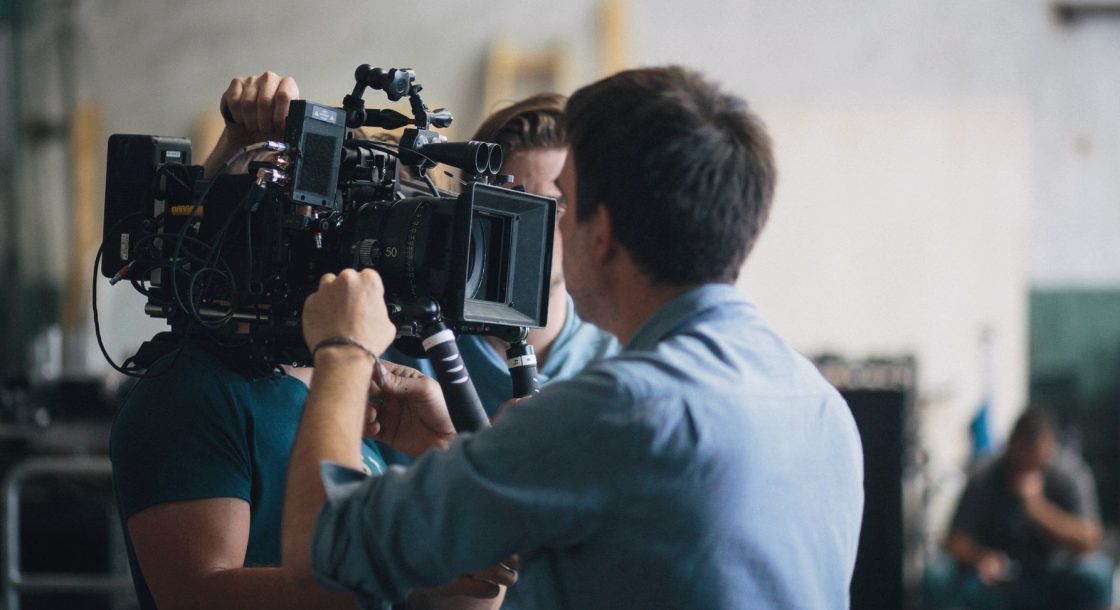
Understanding these three terms also helps you talk to your camera operator. When you say you want a PTC, they know to think about framing, background and light for a face, not just for the scene.
Writing words that sound spoken
The script for a piece to camera is written for the ear, not the page. Short sentences work best. Avoid long lists, tangled clauses and anything you would not say aloud to a friend standing next to you. Read it aloud before you record it; if you stumble in the car park, you will stumble on camera.
Write to the picture as well. If you plan to walk and gesture towards a building mid-sentence, the words must arrive at the right moment. We often ask students to mark on their script where the movement happens, so the sentence and the action meet.
Keep numbers few and simple. One figure, clearly stated, lands better than three. If a fact needs checking, check it before you press record, because a wrong detail spoken to camera is hard to fix later.
- Aim for 35 to 55 words in a typical PTC
- One idea per piece
- Say it aloud twice before recording
Staying composed when the camera is on
Nerves are normal, particularly in cold, wet or noisy conditions, which is what mid autumn tends to give a reporter. The most reliable remedy is preparation: know your opening line cold, and know the last line even better, because ending cleanly is what stops a take from drifting.
Breathe before you start, plant your feet, and look at the lens as if it were a person you are explaining something to. Many students stare slightly off-centre or glance away mid-sentence; a short run-through with the operator watching for eye line fixes this quickly.
If a take goes wrong, stop, reset and go again. Experienced reporters do several takes without fuss. The operator would rather record five calm attempts than one rushed one.
How we teach it at xuplin
In our on-camera reporting sessions, learners record a piece to camera in the first hour and watch it back together. We then take it apart: the opening, the pace, the eye line, the closing words. Nobody is expected to be polished at the start; the aim is to see what you actually do, and change one thing at a time.
Later sessions bring in scripting to picture and working under time pressure, so the delivery stays steady when the situation is not. Classes are small, which means each student records several times and receives specific notes rather than general encouragement.
If you are unsure whether the course suits your level, Tom Ashworth in student coordination can talk through the options with you before you decide.
A piece to camera is a short, spoken moment that puts the reporter in the place and adds what the pictures cannot say. Know what it is for, write it for the ear, keep it to one idea and rehearse until the last line comes easily. If you would like to practise in a classroom with feedback on each take, the on-camera reporting course is where we do exactly that.
Get in touch
By email: hello@xuplin.com